> For the complete documentation index, see [llms.txt](https://helpcenter.channable.com/llms.txt). Markdown versions of documentation pages are available by appending `.md` to page URLs; this page is available as [Markdown](https://helpcenter.channable.com/list-advertise/list-and-advertise-nl/google/google-ads-beheren-en-optimaliseren/google-tekstadvertenties/advertentiegroepen/hoe-gebruik-ik-zoekwoordinvoeging-in-een-advertentiesjabloon.md).
# Hoe gebruik ik zoekwoordinvoeging in een advertentiesjabloon?
Het invoegen van zoekwoorden is een geavanceerde Google Ads-functie die je advertentietekst dynamisch bijwerkt om één van je zoekwoorden op te nemen dat overeenkomt met de zoekopdracht van een klant. Wanneer een klant een van je zoekwoorden gebruikt in zijn of haar zoekopdracht, vervangt Google Ads de code automatisch door het zoekwoord dat je advertentie heeft geactiveerd. Met deze functie kun je één advertentie hebben die er voor klanten anders uitziet afhankelijk van hun zoekopdracht, waardoor je advertenties relevanter en nuttiger lijken.
### Advertenties instellen in Channable
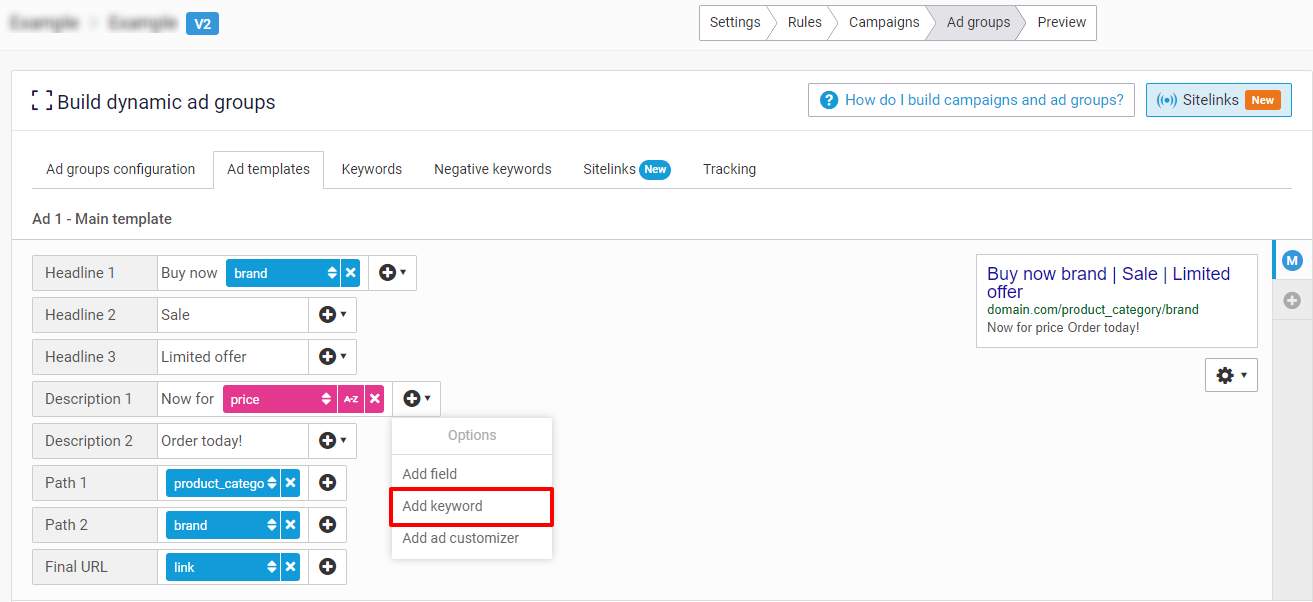
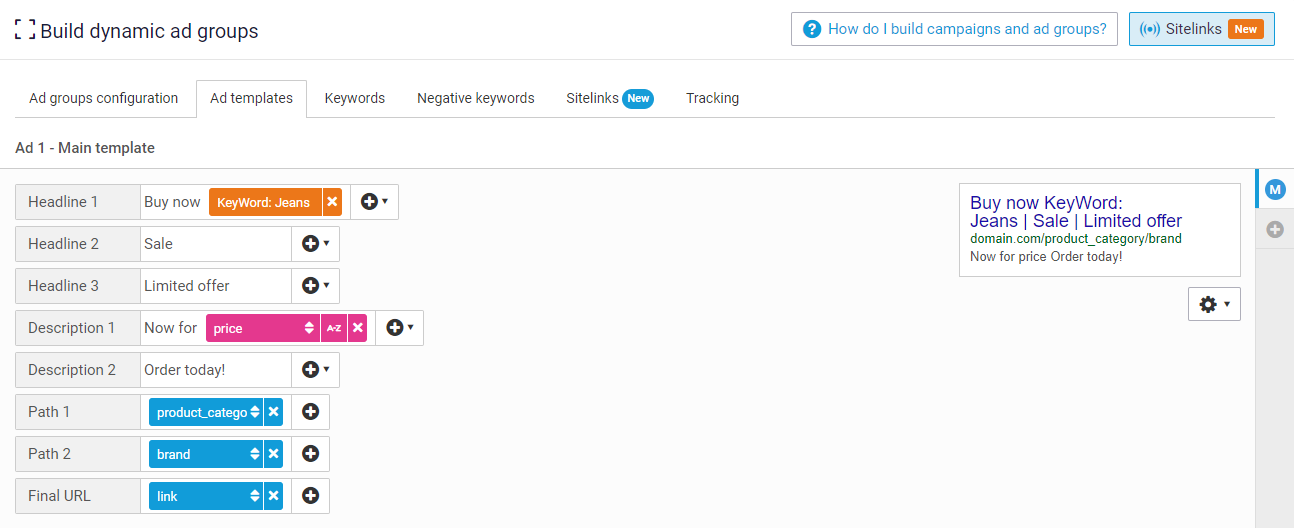
Je kunt de zoekwoorden aan je advertenties toevoegen op dezelfde manier als de dynamische velden en parameters.
In het zoekwoordveld kun je aangeven wat je fallback-code is wanneer de zoekopdracht van de klant te lang is voor het veld.
---
# Agent Instructions
This documentation is published with GitBook. GitBook is the documentation platform designed so that both humans and AI agents can read, navigate, and reason over technical content effectively. Learn more at gitbook.com.
## Querying This Documentation
If you need additional information that is not directly available in this page, you can query the documentation by asking a question.
Perform an HTTP GET request on the following URL with the `ask` and `goal` query parameters:
```
GET https://helpcenter.channable.com/list-advertise/list-and-advertise-nl/google/google-ads-beheren-en-optimaliseren/google-tekstadvertenties/advertentiegroepen/hoe-gebruik-ik-zoekwoordinvoeging-in-een-advertentiesjabloon.md?ask=&goal=
```
`ask` is the immediate question: it should be specific, self-contained, and written in natural language.
`goal` is what the user is ultimately trying to achieve, the reason they need the answer. Sharing it helps GitBook give you a better, more relevant answer. A goal is most helpful when it describes the outcome the user wants rather than restating the question. For example, with `ask=how do I create an API token`, a goal like `automate deployments from our CI pipeline` lets GitBook tailor the answer to that use case.
The response will contain a direct answer to the question and relevant excerpts and sources from the documentation.
Use this mechanism when the answer is not explicitly present in the current page, you need clarification or additional context, or you want to retrieve related documentation sections.